
ASTM D4169-23 Standard Practice forPerformance Testing of Shipping Containers and Systems

VIP免费

Designation: D4169 −23
´1
Standard Practice for
Performance Testing of Shipping Containers and Systems
1
This standard is issued under the fixed designation D4169; the number immediately following the designation indicates the year of
original adoption or, in the case of revision, the year of last revision. A number in parentheses indicates the year of last reapproval. A
superscript epsilon (´) indicates an editorial change since the last revision or reapproval.
This standard has been approved for use by agencies of the U.S. Department of Defense.
ε
1
NOTE—Editorial corrections made throughout in March 2024.
1. Scope*
1.1 This practice provides a uniform basis of evaluating, in
a laboratory, the ability of shipping units to withstand the
distribution environment. This is accomplished by subjecting
them to a test plan consisting of a sequence of anticipated
hazard elements encountered in various distribution cycles.
This practice is not intended to supplant material specifications
or existing preshipment test procedures.
1.2 Consider the use of Practice D7386 for testing of
packages for single parcel shipments.
1.3 The suitability of this practice for use with hazardous
materials has not been determined.
1.4 The values stated in inch-pound units are to be regarded
as standard. The values given in parentheses are mathematical
conversions to SI units that are provided for information only
and are not considered standard.
1.5 This standard does not purport to address all of the
safety concerns, if any, associated with its use. It is the
responsibility of the user of this standard to establish appro-
priate safety, health, and environmental practices and deter-
mine the applicability of regulatory limitations prior to use.
1.6 This international standard was developed in accor-
dance with internationally recognized principles on standard-
ization established in the Decision on Principles for the
Development of International Standards, Guides and Recom-
mendations issued by the World Trade Organization Technical
Barriers to Trade (TBT) Committee.
2. Referenced Documents
2.1 ASTM Standards:
2
D642 Test Method for Determining Compressive Resistance
of Shipping Containers, Components, and Unit Loads
D880 Test Method for Impact Testing for Shipping Contain-
ers and Systems
D951 Test Method for Water Resistance of Shipping Con-
tainers by Spray Method
D996 Terminology of Packaging and Distribution Environ-
ments
D999 Test Methods for Vibration Testing of Shipping Con-
tainers
D4003 Test Methods for Programmable Horizontal Impact
Test for Shipping Containers and Systems
D4332 Practice for Conditioning Containers, Packages, or
Packaging Components for Testing
D4728 Test Method for Random Vibration Testing of Ship-
ping Containers
D5265 Test Method for Bridge Impact Testing
D5276 Test Method for Drop Test of Loaded Containers by
Free Fall
D5277 Test Method for Performing Programmed Horizontal
Impacts Using an Inclined Impact Tester
D5487 Test Method for Simulated Drop of Loaded Contain-
ers by Shock Machines
D6055 Test Methods for Mechanical Handling of Unitized
Loads and Large Shipping Cases and Crates
D6179 Test Methods for Rough Handling of Unitized Loads
and Large Shipping Cases and Crates
D6344 Test Method for Concentrated Impacts to Transport
Packages
D6653 Test Methods for Determining the Effects of High
Altitude on Packaging Systems by Vacuum Method
D7386 Practice for Performance Testing of Packages for
Single Parcel Delivery Systems
1
This practice is under the jurisdiction of ASTM Committee D10 on Packaging
and is the direct responsibility of Subcommittee D10.21 on Shipping Containers and
Systems - Application of Performance Test Methods.
Current edition approved Dec. 1, 2023. Published January 2024. Originally
approved in 2004. Last previous edition approved in 2022 as D4169 – 22. DOI:
10.1520/D4169-23E01.
2
For referenced ASTM standards, visit the ASTM website, www.astm.org, or
contact ASTM Customer Service at service@astm.org. For Annual Book of ASTM
Standards volume information, refer to the standard’s Document Summary page on
the ASTM website.
*A Summary of Changes section appears at the end of this standard
Copyright © ASTM International, 100 Barr Harbor Drive, PO Box C700, West Conshohocken, PA 19428-2959. United States
This international standard was developed in accordance with internationally recognized principles on standardization established in the Decision on Principles for the
Development of International Standards, Guides and Recommendations issued by the World Trade Organization Technical Barriers to Trade (TBT) Committee.
1

F1327 Terminology Relating to Barrier Materials for Medi-
cal Packaging (Withdrawn 2007)
3
F2825 Practice for Climatic Stressing of Packaging Systems
for Single Parcel Delivery
2.2 Military Standards:
4
MIL-STD-810F Environmental Test Methods
MIL-STD-2073–1 DOD Standard Practice for Military
Packaging
2.3 Association of American Railroads Standards:
5
General Information Bulletin No. 2 Rules and Procedures
for Testing of New Loading and Bracing Methods or
Materials
3. Terminology
3.1 Definitions—General definitions for the packaging and
distribution environments are found in Terminology D996.
3.2 Definitions of Terms Specific to This Standard:
3.2.1 acceptance criteria, n—the acceptable quality level
that must be met after the shipping unit has been subjected to
the test plan. See Section 7.
3.2.2 assurance level, n—the level of test intensity based on
its probability of occurring in a typical distribution cycle.
3.2.2.1 Discussion—Level I is a high level of test intensity
and has a low probability of occurrence. Level III is a low level
of test intensity, but has a correspondingly high probability of
occurrence. Level II is between these extremes. For Distribu-
tion Cycle 18 (DC–18), see MIL-STD-2073–1 for definitions
of military levels of protection.
3.2.3 coeffıcient of restitution, n—the ratio of the rebound
velocity to the impact velocity.
3.2.4 distribution cycle (DC), n—the sequential listing of
the test schedules employed to simulate the hazard elements
expected to occur for a specific routing of a shipping unit from
production to consumption. See Table 1.
3.2.5 feeder aircraft, n—small, potentially non-pressurized
aircraft used to transport express packages.
3.2.6 hazard element, n—a specific event that occurs in a
distribution cycle that may pose a hazard to a shipping unit.
The element will usually be simulated by a single test schedule.
See Section 9.
3.2.7 small and lightweight package: for DC’s 2,3,4,6,9,13,
14,15,16,17; packages weighing under 10.00 lb (4.53 kg) and
volume below 2.000 ft
3
(0.056 m
3
).
3.2.8 shipping unit, n—the smallest complete unit that will
be subjected to the distribution environment, for example, a
shipping container and its contents.
3.2.8.1 small shipping unit, n—for DC-18, a small shipping
unit is defined as one having no edge dimension or diameter
over 60 in. (1.52 m) and a gross weight of 100 lb (45 kg) or
less.
3.2.8.2 large shipping unit, n—for DC-18, a large shipping
unit is defined as one having at least one edge dimension or
diameter over 60 in. (1.52 m) or a gross weight in excess of
100 lb (45 kg), or it is one that has a gross weight exceeding
100 lb (45 kg) and is secured to a base or to the base of a
shipping unit.
3.2.9 test plan, n—a specific listing of the test sequence to
be followed to simulate the hazards anticipated during the
distribution cycle of a shipping unit. Included will be the test
intensity and number of sequential tests to be conducted. See
8.5.
3.2.10 test schedule, n—the specific procedure to be used,
including the three assurance level intensities, and a reference
to the test method that is the basis of the schedule.
3.2.10.1 Discussion—The purpose of the schedule is to
simulate the forces occurring during any hazard element of the
distribution cycle. See Section 9.
3.2.11 total velocity change, (∆V), n—the sum of the impact
and rebound velocities.
3.3 Abbreviations:
3.3.1 TOFC—trailer on flatcar.
3.3.2 COFC—container on flatcar.
3.3.3 TL—truckload.
3.3.4 CL—carload.
3.3.5 LTL—less than truckload.
4. Significance and Use
4.1 This practice provides a guide for the evaluation of
shipping units in accordance with a uniform system, using
established test methods at levels representative of those
occurring in actual distribution. The recommended test levels
are based on available information on the shipping and
handling environment, and current industry/government prac-
tice and experience (1-13).
6
The tests should be performed
sequentially on the same containers in the order given. For use
as a performance test, this practice requires that the shipping
unit tested remain unopened until the sequence of tests are
completed. If used for other purposes, such as package
development, it may be useful to open and inspect shipping
units at various times throughout the sequence. This may,
however, prohibit evaluating the influence of the container
closure on container performance.
4.2 For Distribution Cycle 18, as referred to in MIL-STD-
2073–1, the use of this practice is defined in subsequent
sections identified as DC-18.
5. Test Specimen
5.1 Test specimens consist of representative samples of
complete shipping units, including actual contents. Products
with blemishes or minor defects may be used if the defective
component is not to be studied by the test and if the defect is
documented in the report. Dummy test loads are acceptable if
testing the actual product might be hazardous. If a dummy load
3
The last approved version of this historical standard is referenced on
www.astm.org.
4
Available from DLA Document Services, Building 4/D, 700 Robbins Ave.,
Philadelphia, PA 19111-5094, http://quicksearch.dla.mil.
5
Available from Association of American Railroads (AAR), 425 Third St., SW,
Washington, DC 20024, http://www.aar.org.
6
The boldface numbers in parentheses refer to a list of references at the end of
this standard.
D4169 − 23
´1
2

TABLE 1 Distribution Cycles
DC Distribution Cycle
Performance Test Schedule Sequence
(see Section 9for Test Schedule definition)
First Second Third Fourth Fifth Sixth Seventh
1 General Cycle—undefined distribution system Schedule
A
Handling
Schedule D Stacked
Vibration
Schedule F
Loose-Load
Vibration
Schedule G
Rail
Switching
Schedule J
Concentrated
Impact
Schedule A
Handling
2 Specially defined distribution system, user
specified (see Appendix X2)
select from Schedules A through I
3 Single package without pallet or skid, LTL
motor freight
Schedule
A
Handling
—Manual
Schedule D Stacked
Vibration OR
Schedule C Vehicle
Stacking plus
Schedule E Vehicle
Vibration
Schedule F
Loose-Load
Vibration
Schedule J
Concentrated
Impact
Schedule A
Handling—
Manual
...
4 Single package with pallet or skid, LTL motor
freight
Schedule
A
Handling
—Mechanical
Schedule D Stacked
Vibration OR
Schedule C Vehicle
Stacking plus
Schedule E Vehicle
Vibration
Schedule F
Loose-Load
Vibration
Schedule J
Concentrated
Impact
Schedule A
Handling—
Mechanical
...
5 Motor freight, TL, not unitized Schedule
A
Handling
Schedule D Stacked
Vibration
Schedule E
Vehicle
Vibration
Schedule J
Concentrated
Impact
Schedule A
Handling
...
6 Motor freight, TL, or LTL—unitized Schedule
A
Handling
Schedule D Stacked
Vibration OR
Schedule C Vehicle
Stacking plus
Schedule E Vehicle
Vibration
Schedule J
Concentrated
Impact
Schedule A
Handling
Schedule B
Warehouse
Stacking
...
7 Rail only, bulk loaded Schedule
A
Handling
Schedule D Stacked
Vibration
Schedule G
Rail
Switching
Schedule A
Handling
... ...
8 Rail only, unitized Schedule
A
Handling
Schedule D Stacked
Vibration
Schedule G
Rail
Switching
Schedule A
Handling
Schedule B
Warehouse
Stacking
...
9 Rail and motor freight, not unitized Schedule
A
Handling
Schedule C Vehicle
Stacking
Schedule E
Vehicle
Vibration
Schedule G
Rail
Switching
Schedule F
Loose-Load
Vibration
Schedule J
Concentrated
Impact
Schedule A
Handling
10 Rail and motor freight, unitized Schedule
A
Handling
Schedule D Stacked
Vibration
Schedule G
Rail
Switching
Schedule J
Concentrated
Impact
Schedule A
Handling
Schedule B
Warehouse
Stacking
11 Rail, TOFC and COFC Schedule
A
Handling
Schedule G Rail
Switching
Schedule D
Stacked
Vibration
Schedule F
Loose-Load
Vibration
Schedule A
Handling
...
12 Air (intercity) and motor freight (local), over 150
lb (68.1 kg), or unitized
Schedule
A
Handling
Schedule D Stacked
Vibration
Schedule I
Low
Pressure
A
Schedule E
Vehicle
Vibration
Schedule J
Concentrated
Impact
Schedule A
Handling
13 Air (intercity) and motor freight (local), single
package up to 150 lb (68.1 kg)†. Consider
using Practice D7386 for single parcel carrier
shipments.
Schedule
A Han-
dling
Schedule C Vehicle
Stacking
Schedule F
Loose-Load
Vibration
Schedule I
Low Pres-
sure
A
Schedule E
Vehicle Vi-
bration
Schedule J
Concen-
trated Impact
Schedule A
Handling
14 Warehousing (partial cycle to be added to
other cycles as needed)
Schedule
A Han-
dling
Schedule B Ware-
house Stacking
... ... ... ...
15 Export/Import shipment for intermodal con-
tainer or roll on/roll off trailer (partial cycle to
be added to other cycles as needed)
Schedule
A Han-
dling
Schedule C Vehicle
Stacking
Schedule A
Handling
... ... ...
16 Export/Import shipment for palletized cargo
ship (partial cycle to be added to other
cycles as needed)
Schedule
A Han-
dling
Schedule C Vehicle
Stacking
Schedule A
Handling
... ... ...
D4169 − 23
´1
3

摘要:
展开>>
收起<<
Designation:D4169−23´1StandardPracticeforPerformanceTestingofShippingContainersandSystems1ThisstandardisissuedunderthefixeddesignationD4169;thenumberimmediatelyfollowingthedesignationindicatestheyearoforiginaladoptionor,inthecaseofrevision,theyearoflastrevision.Anumberinparenthesesindicatestheyearofl...
声明:如果您的权利被侵害,请联系我们的进行举报。
相关推荐
-
ISO 14155-2020 医疗器械临床实验管理规范(中文版)VIP免费
 2025-09-17 352
 -
ISO 31000:2018 风险管理指南VIP免费
 2025-10-28 303
 -
ISO TS 10974-2018 评估有植入式医疗设备的患者进行磁共振成像的安全性VIP免费
 2025-10-30 181
 -
ISO TS 10974-2018 评估有植入式医疗设备的患者进行磁共振成像的安全性(中文版)
 2025-10-30 240
 -
ISO TS 10974-2018 评估有植入式医疗设备的患者进行磁共振成像的安全性_中英文版VIP专享
 2025-10-30 141
 -
ISO 10993-1-2018 医疗器械生物学评价 第1部分:风险管理过程中的评价与试验_中英文对照VIP专享
 2025-11-03 152
 -
ISO 14155-2026 人体医疗器械临床试验--良好临床实践VIP免费
 2026-04-15 145
 -
ISO IEC 17020 2026 Conformity assessment— Requirements for bodies performing inspectionVIP免费
 2026-05-14 137
 -
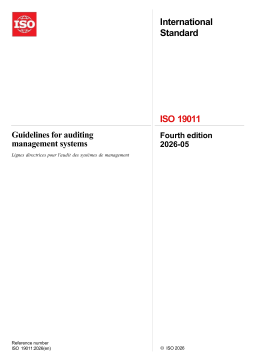
ISO 19011-2026-管理体系审核指南VIP免费
 2026-06-03 110
 -
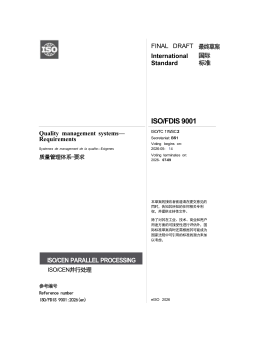
ISO FDIS 9001_2026质量管理体系要求中英文版VIP免费
 2026-07-02 364
作者:trty876...
分类:法规规范
价格:60质量币
属性:20 页
大小:621KB
格式:PDF
时间:2026-04-01